
Built around your business
Commercial battery storage.
Commercial battery storage holds electricity for later use. VOLT helps evaluate storage around demand peaks, operating schedules and the equipment a business wants to support, including integration with on-site solar.
Discuss your project ↗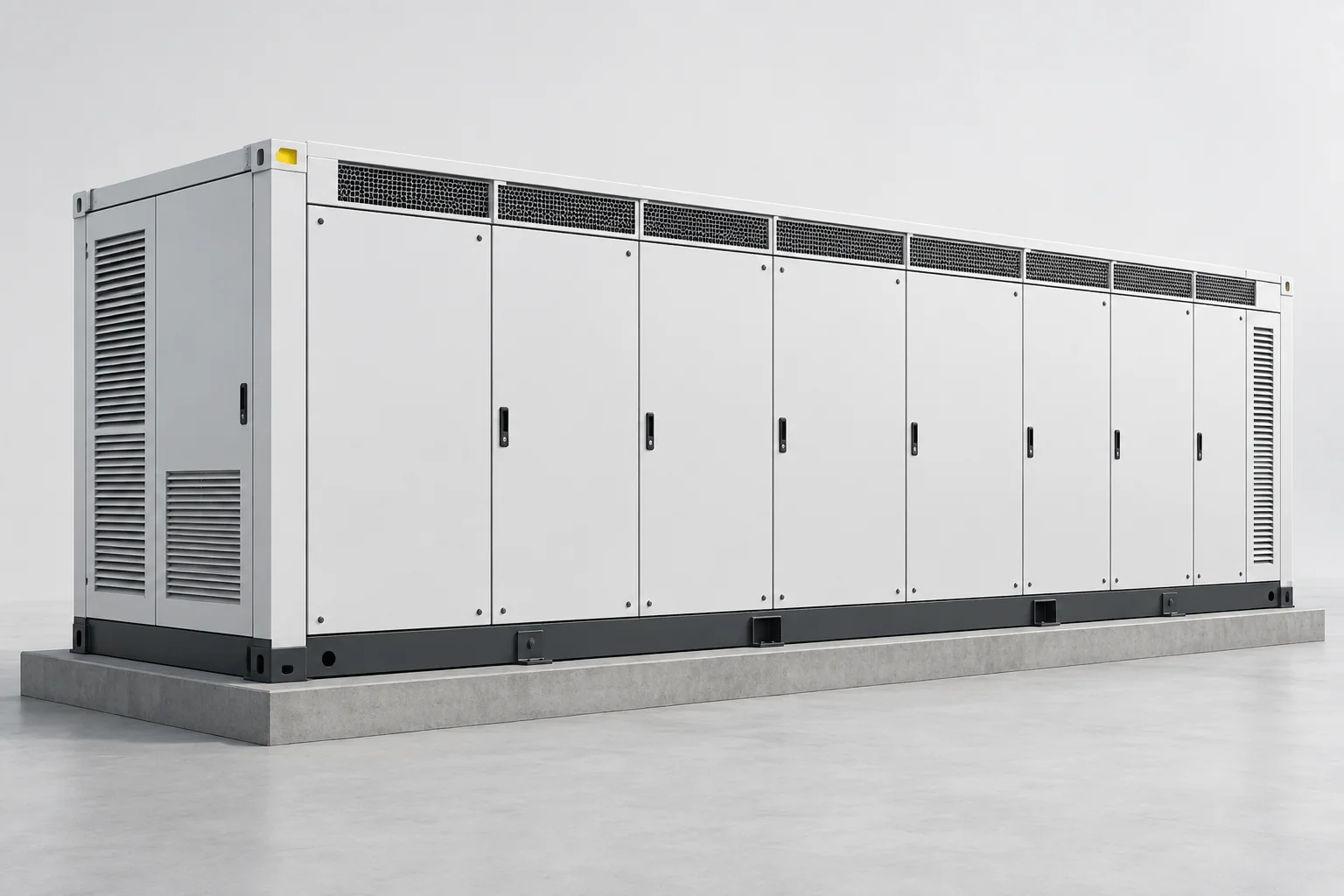
Energy capacity and power serve different needs
Battery energy capacity determines how much energy can be stored, while power determines how quickly it can be delivered. Identifying the equipment to support and the required duration helps define both. A large cabinet alone does not tell you how long a business can run.
Peak shaving: reduce grid demand at the busiest times
Peak shaving uses battery power during periods of high electricity demand so the business draws less power from the grid. Where the tariff includes demand charges, lowering the relevant measured peak can reduce that part of the bill. VOLT evaluates the business’s load profile and utility tariff to plan the battery strategy. The timing and duration of demand peaks matter, as does the charging schedule. Whether storage improves project economics depends on these operating conditions and the full system cost.
Backup requires an integrated design
Backup planning begins with selected critical loads and the duration they need support. Compatible controls, electrical equipment and commissioning are part of that plan. Space, access, ventilation and applicable safety requirements must also be assessed for the site.
Battery storage for new construction
Plan battery placement, access and electrical integration as part of a new commercial development. VOLT coordinates storage with the project’s expected loads, solar plans and construction team. Where operating data does not yet exist, the design starts with projected demand and clearly stated assumptions.
Before you begin
Commercial battery storage questions
Is peak shaving the same as shifting energy to cheaper hours?
No. Peak shaving targets the amount of power drawn during demand peaks. Time-of-use energy shifting targets when electricity is purchased or used. A battery can support both, depending on the utility tariff and its operating plan.
Can batteries work with commercial solar?
Yes. Solar generation and storage can be considered together so charging and discharging match the business’s needs. Equipment compatibility and the electrical design determine how the system operates.
Will a battery back up the entire building?
That depends on the selected loads, battery power and energy capacity, available charge and the backup design. A project should identify which equipment is supported and under what operating conditions.
What should we bring to a storage discussion?
Bring electricity bills, operating schedules and a list of critical equipment. If interval usage data is available, it can help explain when demand peaks occur and how long they last.
Build your energy plan.
Share your property location and project goals with VOLT Commercial. We serve businesses throughout the United States. The team will discuss the site requirements and next steps.
Talk to VOLT ↗